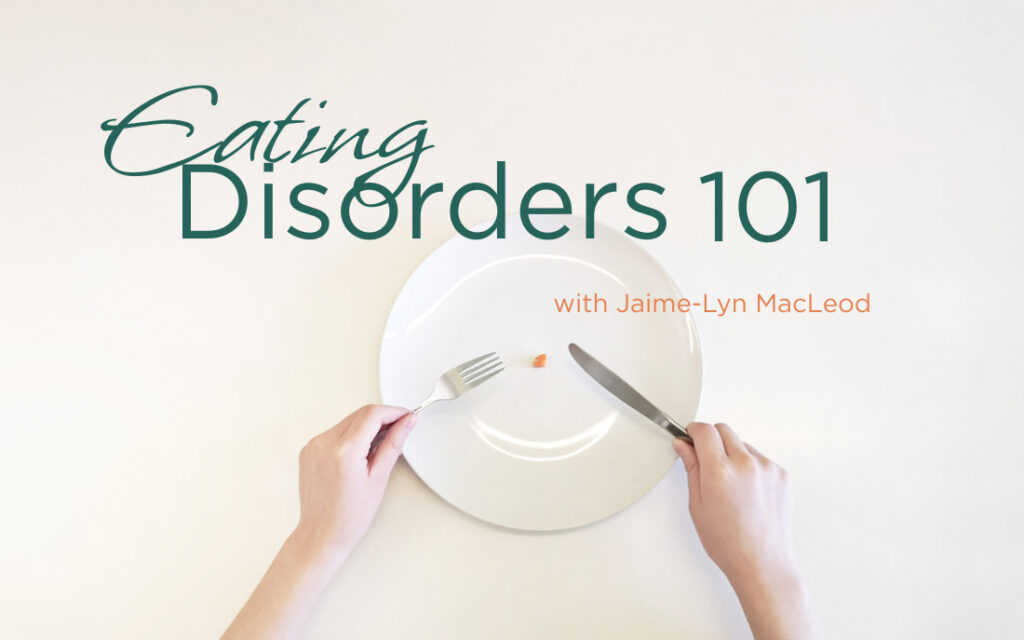
 Eating disorders and disordered eating affect far more people than most of us realize — and they rarely look the way we imagine. There is no single body type, background, or story that defines who experiences them. The reality is that many people are quietly, exhaustingly struggling, often while appearing completely fine on the outside.
In a culture that constantly measures our worth by how we look, this is not surprising. Western society sends relentless messages about what our bodies should be — and when those messages take hold, they can crowd out everything else: presence, joy, connection, even basic comfort in our own skin.
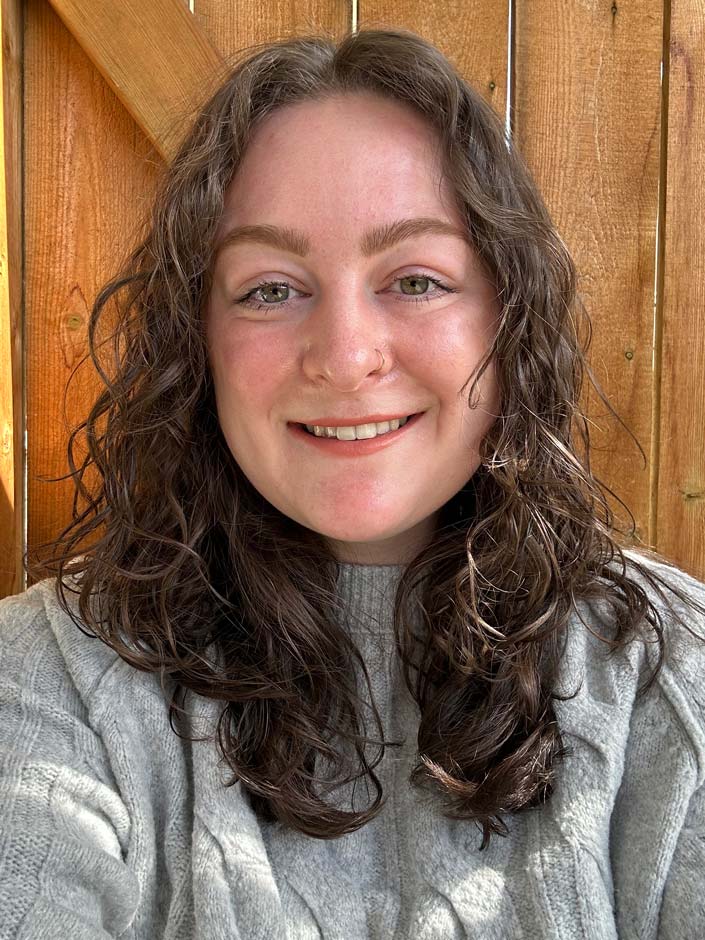
As someone who personally lived with an eating disorder for nearly 15 years, I know just how consuming and draining it is to be in constant negotiation with your body and your food. I also know that healing is possible — and that you do not have to walk through it alone.
What We Often Get Wrong About Eating Disorders
Many people carry a narrow picture in their minds of what an eating disorder “looks like.” This picture — shaped by media portrayals and cultural stereotypes — misses the vast majority of people who are actually affected. Eating disorders do not discriminate by size, gender, age, or appearance.
What eating disorders share, regardless of how they present, is a preoccupation with food, body image, and appearance that steals attention away from the present moment. From a psychological standpoint, this preoccupation often functions as a coping mechanism — a way the mind learned, at some point, to manage overwhelming memories, emotions, experiences, or thoughts (Harrison, 2019). The fixation becomes a survival strategy, even as it causes its own suffering.
Equally important: the cultural normalization of dieting and body dissatisfaction makes it harder to recognise when something has moved from common to harmful. Struggling with your relationship with food and your body is widespread — but widespread does not mean inevitable, and it does not mean help is not available.
Body Neutrality: A Gentler Starting Point
For many people in recovery, the goal of “loving your body” can feel impossibly far away — and pressure to get there quickly can actually be counterproductive. Body neutrality offers a more accessible starting point.
Rather than aiming to feel positive about your body, body neutrality invites a neutral, non-judgmental relationship with it: appreciating what your body does, rather than judging what it looks like (Poirier, n.d.). Research supports three core principles of body neutrality (Pellizzer & Wade, 2023):
- A neutral, realistic, mindful, and flexible attitude toward the body
- Caring for, appreciating, and respecting the body for its functions and capabilities
- Recognizing that self-worth is not defined by appearance
Try This: A Body Neutrality Practice
Choose one part of your body and take a moment to thank it — not for how it looks, but for what it allows you to do.
“Thank you to my legs for carrying me on walks.”
“Thank you to my arms for letting me hold the people I love.”
“Thank you to my hands for creating things that matter to me.”
Consider setting a daily phone reminder or placing a sticky note somewhere visible with a simple phrase: “My body allows me to experience the world” or “I am worthy because I exist” (Harrison, 2019).
“How you look is the least interesting and important thing about you.” — Kneeland, 2023
Approaches That Support Healing
There is no single path through an eating disorder, which is why I draw on several evidence-based therapeutic approaches depending on what each person needs:
- Acceptance and Commitment Therapy (ACT): Helps you build a different relationship with difficult thoughts — recognising them as thoughts rather than facts, and finding ways to move toward what matters to you even when those thoughts are present.
- Emotion-Focused Therapy (EFT): Focuses on identifying and processing the underlying emotions that often drive disordered eating patterns, helping you move through difficult feelings rather than around them.
- Internal Family Systems (IFS): A compassionate, parts-based approach that explores the different “parts” of yourself — including the parts that may be driving harmful behaviours — without shame or judgment.
- Observed and Experiential Integration (OEI): A body-based trauma treatment that works with how difficult memories and experiences are stored in the nervous system, which can be especially relevant when eating disorders have roots in past trauma.
Try This: An ACT Practice for Food and Body Thoughts
One of the most helpful shifts in ACT is learning to notice thoughts without being ruled by them. The next time you find yourself caught in a loop of thoughts about your body or food, try reframing the thought in this format (Harris, 2022):
“I notice the thought that my body is not acceptable.”
“I notice the thought that I should not have eaten that.”
“I notice the thought that other people are judging how I look.”
This small shift — from “my body is not acceptable” to “I notice the thought that…” — creates a little distance between you and the thought. Thoughts are not facts. They are mental events, and we do not have to treat them as truth.
A Note on Resources
If you are curious to learn more about intuitive eating and the ways diet culture shapes our relationship to food and our bodies, Anti-Diet by Christy Harrison (2019) is an excellent starting point. It explores the myths that surround “healthy” eating and offers a thoughtful, research-grounded path toward food freedom.
You Don’t Have to Figure This Out Alone
If any of this resonates with you — whether you are in the thick of a struggle, quietly wondering if what you’re experiencing is “normal,” or simply ready to feel differently about your body and your relationship with food — I would be honoured to be a part of your journey.
Healing is not linear, and there is no single right way to begin. What matters is that you take one step toward support, at whatever pace feels right for you.
Read more about Jaime-Lyn’s approach and background and reach out to our team at Living Bridges Therapy Collective in Kamloops to book a free 15-minute consultation. We’re here when you’re ready.
References
Harris, R. (2022). ACT made simple: An easy-to-read primer on acceptance and commitment therapy (2nd ed.). New Harbinger Publications.
Harrison, C. (2019). Anti-diet: Reclaim your time, money, well-being, and happiness through intuitive eating. Little, Brown Spark.
Kneeland, J. (2023). Body neutral: A revolutionary guide to overcoming body-image issues. Penguin Life.
Pellizzer, M. L., & Wade, T. D. (2023). Developing a definition of body neutrality and strategies for an intervention. Body Image, 46, 434–442. https://doi.org/10.1016/j.bodyim.2023.07.006
Poirier, A. (n.d.). 5 steps to body neutrality. NEDA: National Eating Disorders Association. https://www.nationaleatingdisorders.org/5-steps-body-neutrality/